Indoor Air Pollution - IAQ
More on Air Quality Indoors
Research Report: Indoor
air pollution
Research Report: Causes
of indoor air pollution
Research Report:
Biological
contaminants
Research Report: How
biological contaminants affect
health
Research Report: Improving
the quality of indoor air
Research
Report: Ozone
air cleaners or air purifiers
Research
Report: Indtrocution
to ultraviolet light air purifier
Research Report: Sick Building Syndrome
(SBS)
Indoor Air Pollution
PDF
INDOOR AIR POLLUTION
Everyone faces many risks, including
various pollutants and toxins in their daily environments.
Most people know that outdoor air pollutants such as car
exhaust, city smog, factory waste, etc. are toxic. But many
people do not realize how dangerous the air inside buildings
can be to their health. The EPA (U.S. Environmental Protection
Agency) states that the air in even the largest and most
industrialized cities is less toxic than air found in typical
homes. Many people do not know that indoor air pollutants can
be two to five times higher than outdoor air pollution and can
sometimes be 100 times higher!
It is estimated the most people spend 90% or more of
their time indoors. Because of this, the quality of the indoor
air we breathe every day becomes critical. Additionally, those
who are indoors for the longest periods are often those who
are the most susceptible to the effects of indoor air
pollution-including the elderly, the young, and the
chronically ill.
Various micro-organisms such as bacteria, viruses,
molds, and fungi often become airborne and this is a common
cause of illness or allergy. With the threat of biological
warfare, the eradication of airborne pathogens becomes even
more important.
CAUSES OF INDOOR AIR POLLUTION
There are many items in a home or office that can be
sources of indoor air pollution. These include:
- Building
materials and furnishings:
New or damp carpeting.
Cabinets or furniture made
of pressed-wood products.
Deteriorated
asbestos-containing insulation.
- Combustion sources:
Oil, gas,
kerosene, coal, wood, tobacco products.
- Combustion appliances (vented or unvented):
Gas ranges and ovens, gas water
heaters, furnaces, gas clothes dryers, wood or coal-burning
stoves, fireplaces, and space heaters.
- Products for cleaning and building
maintenance:
Air fresheners, glues and
adhesives, paints and coating materials.
- Products for personal care or
hobbies:
Hair
spray, woodburning, soldering, welding.
- Central heating and cooling
systems:
Air ducts and shafts contaminated with
mold and fungi.
- Outdoor
sources:
Radon, pesticides, outdoor air pollution
(factories, etc.) and combustion engines such as in lawn
mowers or vehicles.
Water vapor can affect air pollution as
well. It results in wet surfaces and/or high humidity. This,
in turn, promotes the growth of biological toxins such as
mold, bacteria, and dust mites.
The amount of pollution a particular source gives off
can vary widely, depending upon how old that source is and/or
how well it has been maintained. For example, new carpeting
can emit high levels of toxic gases while older carpeting has
relatively few. A gas stove can give off much more carbon
monoxide if it has not been properly adjusted compared to one
that has been properly maintained.
Some sources of indoor air pollution release their toxins
fairly continuously…these include things like building materials, central heating
and cooling systems, air fresheners, etc. Other sources release pollutants erratically-these
sources are typically related to activities in the building such as smoking,
cooking, the use of solvents in hobbies, redecorating, or cleaning activities;
and the use of pesticides and cleaning products. High levels of these toxins
can remain in the air long after the source activity has ceased. That's what
the OxyCat Formula cleans
up for you.
|
BIOLOGICAL CONTAMINANTS
Bacteria, viruses, mold, mildew, animal dander, cat
saliva, dust mites, cockroaches and pollen are listed among
the types of biological contaminants often present in homes or
offices.
Sources of these pollutants are quite
diverse:
- Viruses are transmitted by people and animals
- Pollens come from plants
- Pets have saliva and dander
- Bacteria are spread by people, animals, and soil/plant
material
- Protein from urine in mice and rats is a potent allergen
and can become airborne when dry.
When biological contaminants enter the central/forced
air heating and cooling systems, these systems become their
breeding grounds. Mold, mildew, and other pollutants are then
distributed throughout the home or office.
If standing water, water-damaged materials, or wet surfaces
are present, they also become breeding grounds for mold, mildew, bacteria,
and insects. House dust mites are a strong biological allergen for many
people and these breed in damp, warm environments.
|
|
How Biological Contaminants Affect
Health
Infectious illnesses are often transmitted through the
air-diseases such as colds, flu, measles, and chicken pox. Molds and mildews
release toxins that can causes disease. Biological contaminants can cause
health problems with symptoms such as sneezing, watery eyes, lethargy, fever,
digestive problems, coughing, shortness of breath, and dizziness. Those
particularly at risk for such problems are the elderly, children, and people
with breathing problems, allergies, and lung diseases.
Biological agents can trigger allergic reactions such
as allergic rhinitis, asthma, and hypersensitivity
pneumonitis. Only after repeated exposure to a biological
allergen will an allergic reaction occur. This reaction may
happen on the second exposure or after many exposures over
time. Because of this, even those who have noticed no
reactions at all or only mild reactions might suddenly become
very sensitive to particular allergens.
Humidifier fever is an illness associated with exposure
to toxins from biological contaminants that breed in large
building ventilation systems, as well as home heating and
cooling systems and humidifiers. Our UV air purifiers help
eliminate this problem.
|
|
According to the EPA, there are three basic ways in which
the quality of the air we breathe while indoors can be improved: controlling
or removing the source, improving the ventilation, & cleaning and purifying
the air.
1.
Source Control
An effective way to improve indoor air quality is to
eliminate individual sources of pollution or to reduce their
emissions. Some sources, like those that contain asbestos, can
be sealed or enclosed. Other sources, like gas stoves, can be
properly maintained and adjusted to decrease the amount of
emissions. Source control is often a more cost-effective
approach than improving ventilation because increased
ventilation increases energy costs. It is difficult to control
the source of indoor air pollution, however, when the issue is
biological contaminants. That's where UV comes in.
2.
Ventilation Improvements
Increasing the amount of outdoor air that comes indoors
can decrease the concentrations of indoor air pollutants. Most home heating
and cooling systems, including forced air heating systems, do not mechanically
bring fresh air into the home. In the absence of such a system, a homeowner’s
recourse is to open windows or doors, using window or attic fans, or running
a window air conditioning unit with the vent open-weather permitting for
all options. Localized fans such as kitchen and bathroom exhaust fans can
help by removing air pollution directly from the room where the fan is located.
Office buildings can pose special challenges. In the
past, most buildings had windows that opened and airing out a
stuffy room was commonplace. Differences between indoor and
outdoor air pressure also helped ventilation by the movement
of air through leaks in the building.
Today, most newer office buildings have no operable
windows, buildings are sealed tightly, and mechanical systems
are the only way to exchange indoor air for the relatively
cleaner outdoor air. Ventilation rates, or the rate at which
outdoor air is supplied to a particular building, is specified
by the building code. If these mechanical ventilation systems
are poorly designed, operated, or maintained, the systems
themselves can add to indoor air pollution levels. Sometimes
in an effort to save energy costs, ventilation systems do not
bring in proper amounts of fresh outdoor air. Air supply and
return vents in particular rooms can be blocked or poorly
placed so that the fresher outdoor air does not reach the
people in the building.
The ventilation systems themselves can be a source of
pollution by spreading biological contaminants that have been
breeding in cooling towers, humidifiers, dehumidifiers, air
conditioners, or the ductwork. Lastly, outdoor air intake
vents may be placed in areas that bring in air that has been
contaminated with vehicle exhaust, dumpster fumes, boiler
emissions, or air vented from restrooms. In the event of
biological warfare, these intake vents may be in areas
accessible to the public and thus, susceptible to pathogens
being placed in the intake vents. High output UV systems can
destroy many of these bio-terrorism agents like Anthrax or
Small Pox.
How the building is used can also contribute to indoor
air pollution if it is not properly ventilated. Buildings that
house multiple uses or businesses such as restaurants, print
shops, dry cleaning stores, etc. have various emissions that
may be circulated back into offices in the same building if
proper precautions aren’t taken.
3. Air
Cleaners
Many types and sizes of air cleaners are available on
the market, from relatively inexpensive table-top models to
expensive and sophisticated whole house systems. Some air
cleaning systems are quite effective at particle removal,
while others (particularly table-top & tower models) are
much less effective. Air cleaners are generally not designed
to eliminate gaseous particles or living organisms.
Many companies tout "ozone generators" as the best thing
for indoor air pollution. This is not the best way
to purify indoor air…
|
|
Ozone Generators That Are Sold as Air
Cleaners
(See the "Ozone Air Purifier Study" to
view the EPA report on these misleading air
purifiers) click here
Ozone generators intentionally produce the gas ozone
and these machines are sold as air cleaners. According to the EPA, the vendors
of ozone generators often make claims that encourage people to believe that
these machines are always safe and effective in controlling indoor air pollution.
For nearly 100 years health professionals have disagreed with these statements.
Some manufacturers of ozone generators even claim that the federal government
has approved these machines for use in occupied spaces. The EPA reports
that NO federal agency has approved ozone generators for use
in occupied spaces and indeed, ozone can actually cause health problems
at high concentrations. Nearly every state health department recommends these ozone
air purifiers and ionic air purifiers not be used.
The air we breathe is comprised of mainly oxygen and
nitrogen. Two atoms of oxygen comprise the basic oxygen
molecule that is the oxygen we breathe (O2). A high voltage
discharge (such as a thunderstorm) can create ozone by
breaking apart the O2 oxygen atoms. These extremely reactive
oxygen atoms recombine in groups of three and the result is
ozone (O3) or trivalent oxygen, (also called "activated
oxygen"). This third oxygen atom can detach from the O3
molecule and attach itself to other molecules, such as
pollution, thus altering its chemical composition. This
property is the basis of the claims made by the manufacturers
of ozone generators.
The EPA uses the phrase "good up high-bad nearby" to
describe ozone. This phrase makes the distinction between
ozone in the upper atmosphere ("stratospheric ozone") which
helps filter out damaging radiation from the sun, and ozone in
the lower atmosphere (in the air we breathe, 'ozone action
day') which is harmful to the respiratory system. This harmful
ozone can be produced via an interaction of sunlight with
various chemicals in the environment such as emissions by
vehicles and industrial plants.
Available scientific evidence shows that ozone has
little ability to remove indoor air pollutants at
concentrations that do not exceed public health standards.
Some manufacturers or vendors of ozone generators claim that
ozone will make almost every chemical pollutant harmless by
producing a chemical reaction that leaves only carbon dioxide,
oxygen and water. This claim is misleading to the
public.
Scientific research shows that for chemicals commonly
found indoors, the reaction with ozone may take months or
years.
If ozone does not readily react with a chemical,
irritating by-products are often the result.
Ozone
does not remove particles from the air such as dust
and pollen. These particles are common causes of allergies.
Some ozone machines include an "ion generator" or "ionizer" in
the unit. An ionizer or ionic air purifier disperses
negatively charged ions which attach to particles in the air.
These particles then attach to surfaces such as walls or
furniture. Scientific experiments have shown that ionizers are
less effective in removing pollen, fungal spores, tobacco
smoke, or dust particles than other methods of air cleaning
such as high efficiency particle filters or electrostatic
precipitators.
Evidence shows that at concentrations that
do not exceed public health standards, ozone is not effective
at removing many odor-causing chemicals.
Evidence also
shows that at concentrations that do not exceed public health
standards, ozone does not effectively remove viruses,
bacteria, mold, or other biological contaminants.
Some studies suggest that low levels of ozone may
inhibit the growth of some biological pollutants and reduce
their airborne concentrations. Ozone concentrations, however,
would have to be 5 - 10 times higher than public health
standards recommend to decontaminate the air sufficiently to
prevent the regeneration of the biological contaminants once
the ozone is removed.
Even high concentrations seem to have
no effect on biological pollutants implanted in porous
materials like ceiling tiles or duct lining.
Simply put,
the ozone produced by ozone generators may inhibit the growth
of biological contaminants while the ozone is present, but it
is quite unlikely to completely decontaminate the air unless
concentrations are high enough to become a health concern to
people and pets.
What’s worse is that the ozone generators available produce
varying and unreliable levels of ozone, even when used according to manufacturer
instructions. Various factors can also influence the level of ozone produced
in a room, including the size of a room, the setting of the machine, whether
doors to the room are open or closed, and whether the ventilation system
is turned on or off. Even if these machines are used in unoccupied spaces,
when ozone is produced in high concentrations, damage can be caused
to plants, rubber, electrical wire coatings, and fabrics and artwork containing
susceptible dyes and pigments.
|
|
ULTRAVIOLET FILTERS
Introduction to Ultraviolet
Light
The sun generates ultraviolet rays-these rays are nature’s
air purifier. When sunlight passes through a prism it is broken into its
component colors, thus giving it the colors of a rainbow. Each color, in
turn, has its own wavelengths. Ultraviolet light has four specific wavelengths
that have particular applications:
UV-A is the source of suntanned
skin-with its relatively longer wavelength, can penetrate the
atmosphere. Applications include tanning beds and treatment of
skin diseases.
UV-B is in the middle
wavelength of the ultraviolet spectrum and has been used to
treat skin diseases, principally.
Shortwave UV Energy is
primarily used as a sterilizer and can be generated by
specially designed UV lamps.
UV-C, or
shortwave ultraviolet radiation, is used to destroy bacteria
and other biological contaminants in the air, in liquids,
food, or on surfaces.
UV-V is the type of
germicidal UV to stay away from, that's
a combination of UV & ozone. UVA,
UVB and UVC are the main wavelengths
of UV light, but UVV is the term used
for UV & ozone.
Ultraviolet Light and Microorganisms
Ultraviolet rays with a UV-C wavelength will destroy
pathogens such as viruses, bacteria, mold, and mildew. This
component of sunlight is the main reason that microorganisms
die in outdoor air. The UV-C rays break through the outer
membrane of microbes like yeast, mold, bacteria, viruses, or
algae. When the radiation reaches the DNA of the microbe, it
causes modifications. The DNA then transmits incorrect codes
and this causes the death of the microbe.
Ultraviolet germicidal lamps provide a much more
powerful and concentrated effect of ultraviolet energy than
can be found naturally. Such lamps sanitize air that is passed
directly in their path to destroy pathogens that come in
contact with the UV rays. Musty, moldy type odors can be
eradicated, along with tuberculosis, cold and flu viruses,
smallpox, anthrax, and other airborne diseases. This system is
particularly beneficial to those suffering from
allergies-common allergens are molds, mildews, and fungi.
These microbes would be destroyed, improving the health of the
allergy sufferer.
Ultraviolet germicidal irradiation has been studied for
over a century and has been used to
destroy the same microbes that cause
indoor air pollution. For many years
the medical industry has used UV light
to sanitize rooms and equipment. The
Centers for Disease Control recommend
UV lamps for their germicidal effect.
Keep in mind that our Blue UV system provides upwards
of 24,000 microwatts of UV energy-enough to eradicate most any pathogen,
including colds, flu, smallpox, anthrax, molds, e coli, Legionnaires
Disease, salmonella, staph, and many more. Our high output 'Blueray'
produces 36/40,000. Higher amounts can be achieved through one of
our custom made systems, we make them for homes, offices, etc.
The CaluTech air purifiers are a superior UV air
purifier.
The UV lamps are so efficient that once all air
in the building has passed this system an average 98% of
microorganisms are destroyed. And the cycle continues…namely,
when all the air in the building is cleaned a second time, 98%
of the remaining microorganisms are destroyed (this is 98% of
the 2% that were remaining from the first time). And so it
continues… |
Who Can Use the Blue UV Lights System?
Right now, any home or building with forced air heating
and/or cooling can utilize our system. Anyone with rudimentary home improvement
skills can install this system in their house or condominium in about 10
minutes. To do this, 2 holes are made in the ductwork of your ventilation
system using our stick-on template and a hole saw. The UV air purifier light
bulbs are slid into the holes and 4 quick-remove screws hold the UV light's
power unit in place on the outside of the air duct. Next, you just plug
it in. Alternatively, a heating and air conditioning serviceman can install
it for you. For more information on installation visit our FAQ page (installation info is towards the
bottom of the FAQ page).
Maintenance is minimal. The UV lamps should be kept as
dust-free as possible to ensure their
maximum effectiveness. This is easily
accomplished by regular changings of
the air filter which should be done
anyway. The UV lamps should ideally
be replaced every 12 months for maximum
effectiveness. They can, however, be
used for up to three years with less
efficiency, but this is not recommended.
Replacement UV lamps are available from
CaluTech, and can be purchased right
here at the CaluTech website.
Replacement UV lamps are also readily
available at lighting stores nationwide.
UV lamps are included with the UV air
purifiers.
Larger existing buildings can easily be retrofitted
with these units as well. Thus, any building with a forced air
system can enjoy pathogen-free and allergen-free air. If
you're a homeowner and your home is over 10,000 Sq. Ft.,
please call us for a custom UV air purifier, the cost is
generally close to the standard units. If your home or
business is 200 to 10,000 Sq. Ft., the UV air purifiers sold
on this website produces enough UV light for you
already.
Commercial & Industrial
For over 14 years we've manufactured custom fit systems...
From vehicles to single storefronts to entire warehouses, oil rigs, ships and beyond, we've been making custom products for our clients when an off the shelf product doesn't fit the job.
If you're a contractor or an enterprise business and need UV lights for air sanitation, sterilization or purification we can design and manufacture UVC light systems that custom fit your application.
To get started simply follow our 'contact' button and fill out the form describing what's needed. We'll reply within 24 hours with the information we need to get you a free quote. Eventually, we'll ask for the following:
- Photos of ventilation systems, in & out
- Interior duct or AHU measurements
- Average interior temperature
- Airflow / CFM of systems
- Square footage, ceiling heights, etc.
- Any known air quality / sick building issues
Sick building syndrome, at the workplace, is known to reduce employee
productivity and reliability. Employees are often found to use more
sick days in a sick building.
<-- Get a free quote on a custom built UV sterilization system
for your facility.
Often
when employees work in a sick environment they feel a sense of relief after leaving work.
Many times the problem is evident when employees continually complain of ongoing
headaches, nausea, coughing, dry skin (or itchy skin), problems concentrating on their
work, eye and nose irritation, dry throat, fatigue, and increased sensitivity to odors.
Learn more about SBS and what you can do about it with our past research on Sick Building Syndrome.
UV Purifiers for your Home
Our whole house air purifiers you can install yourselfLooking for replacement UV lamps? | Check order status
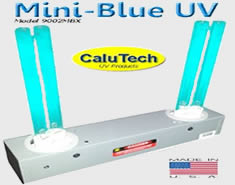
For homes under 1,400 square feet, cottages, mobile office, small condos with HVAC. Manufactured since 2001.
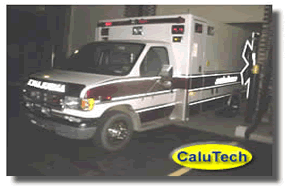
Kills germs like bacteria & viruses. These are also used in Ambulances and mobile medical vehicles for air sterilization & reduction of airborne viruses.

Our best seller. For homes 1,400 to 2,500 square feet and single storefronts (strip malls). Manufactured since 2003.
Kills bacteria & viruses along with weak mold. Can also be used in larger areas but one system should be installed in each air handler (where multiple HVAC systems exist).

For homes 1,000 to 4,000 square feet. Features more power for destruction of mold spores. Manufactured since 2004.
Kills mold, most airborne bio-terrorism organisms, bacteria & viruses. Install one per air handler (if multiple HVAC systems exist). Also recommended for high humidity regions.
Customer Reviews
a few consumer reviews, with a link to a whole lot more
-
I am a banker and not a mechanic, carpenter or electrician. The installation of the UV purification system took me about 10 minutes. I woke up this morning feeling charged and rested with my sinuses clear and no congestion for the first time in months. -Guy Yancey, San Angelo, Texas
We bought the Calutech Blue to install in a customer's home. This woman has had bad allergies and nasal problems for a long time. She told us the next morning her sinuses were clear. I couldn't believe it worked that fast. You can depend on us buying a lot more Blue air purifiers. -Bourque Mechanical Systems, Rensselaer, New York
I don't know if it is just coincidence but ever since we closed up the house at night my son who has allergies has been stuffed up and I usually wake with a headache here and there. Well letting the fan run on circulation all day I noticed last night my son didn't need his nose spray for the first time in a long time, and I woke with no stuffed nose. I have no complaints and am pleased with the primary results after 1 day.... that thanks for a great product. -Bill Rycraft, Bolingbrook, Illinois
I purchased your Blue version that I installed in my home about 5 years ago... it was a lifesaver for my son with asthma and allergies. -Sharon Coward, New Jersey
I am amazed how poorly we breathe at home when the system is not functioning. We love the product. -Jeff Arent, Brevard County, Florida ...more reviews
|